Last updated: May 2026
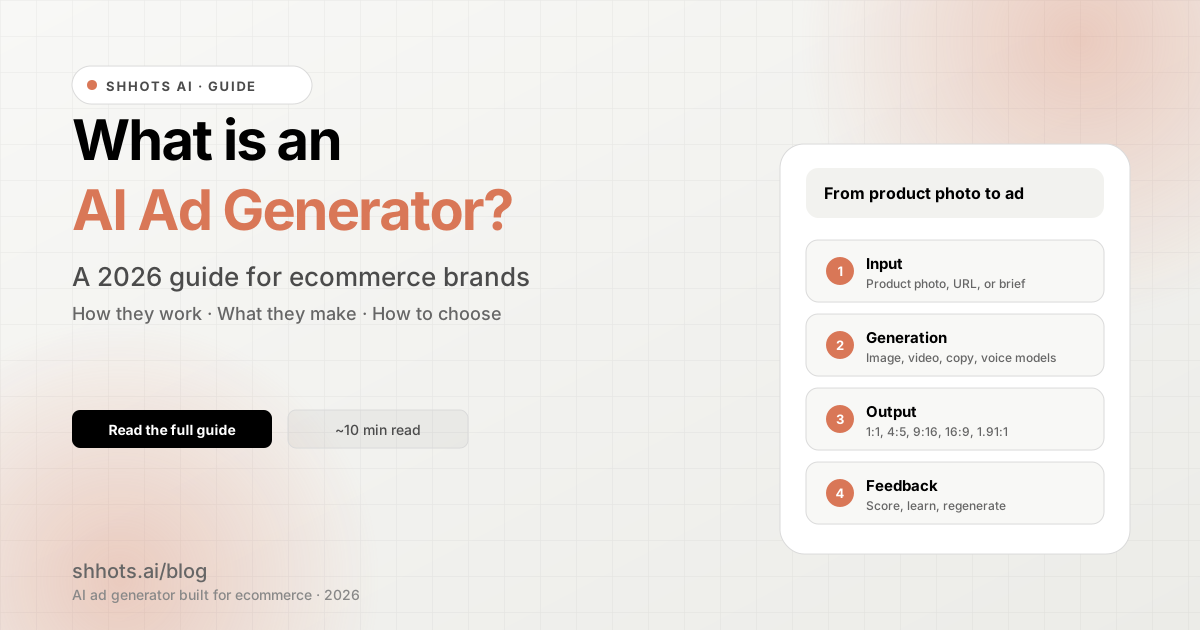
An AI ad generator is a software tool that turns a product photo, a product URL, or a short brief into finished advertising creative. The output is usually a static image ad, a short video ad, ad copy, or all three. Most platforms target ecommerce brands selling on Shopify, Amazon, and direct-to-consumer channels. The fastest tools produce a publishable asset in under three minutes per format. This guide explains how AI ad generators work, what kinds of creative they produce, who they fit, and how to choose one in 2026.
The category exists because ecommerce ad performance dies fast. Most paid campaigns lose efficiency in 7 to 14 days as audiences saturate on the same creative, so the lever to keep spend efficient is creative volume. A small in-house team usually ships 5 to 20 new ads a week. A scaled brand needs 100 to 300. AI ad generators close that gap by producing ad-ready assets in minutes per unit, at a fraction of the marginal cost of a designer.
An AI ad generator is not a media buyer, an analytics platform, or a generic image model. It does not place ad spend or pick audiences. It does not measure ROAS or run experiments inside Meta or Google. It differs from a tool like Midjourney or Stable Diffusion in one important way: it is purpose-built for ad output, with platform-correct aspect ratios, brand-consistent styling, and commercial licensing on the outputs. Most marketers pair an AI ad generator with a separate analytics tool and the native ad managers from Meta, Google, and TikTok.
What this guide covers
- How AI ad generators work, broken into the four layers: input, generation, output, and feedback.
- The five types of AI ad creative they produce: image, video, UGC, copy, and voiceover.
- Who uses them, with six concrete personas from solo founders to media buyers.
- How AI ad generators compare to a traditional ad agency, with hard numbers on cost, speed, and volume.
- Seven criteria to evaluate before you pick one.
- What the first week looks like once you sign up.
- A 12-question FAQ covering pricing, platforms, conversion, designer replacement, and common objections.
How AI Ad Generators Work
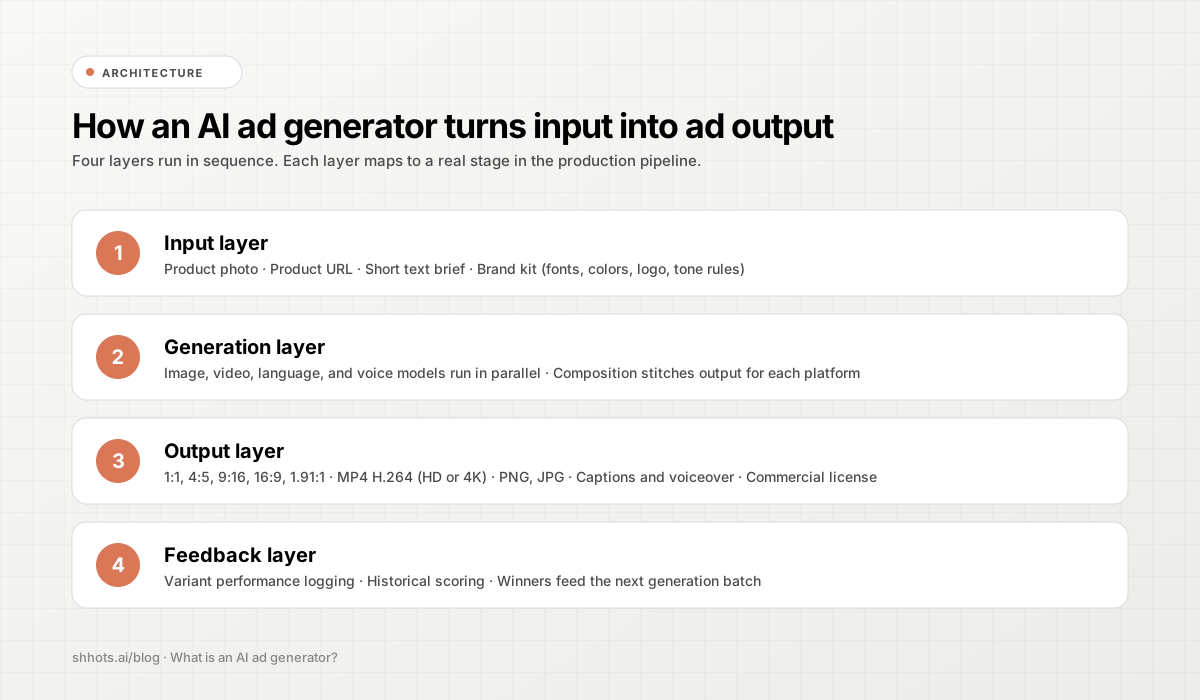
An AI ad generator is best understood as four stacked layers. Each layer corresponds to a real stage in the production pipeline.
The input layer
The input is the smallest amount of data the system needs to make a finished ad. The most common input is a single product photo. The second most common is a product page URL, which the system scrapes for the image, title, price, and bullet points. Some tools accept a short text brief or a competitor reference. A few advanced platforms accept an entire brand kit, including fonts, color palette, logo files, and tone-of-voice rules. The quality of the output is correlated with the quality of the input. A clean product photo at 1080p or above produces noticeably better ads than a low-resolution supplier image.
The generation layer
The generation layer is where the system selects models and assembles the creative. A modern AI ad generator runs several specialized models in parallel. An image model handles background scenes and lighting. A video model handles motion and camera work. A language model writes copy and hooks. A voice model produces the voiceover. A composition layer stitches these outputs into the right aspect ratio for the target platform. Better tools route the work through models tuned on advertising data, not general creative output. That tuning is what separates an AI ad generator from a generic image or video tool.
The output layer
The output layer formats the finished creative for the channels you actually post to. A practical setup ships every ad in five sizes: 1:1 for feed, 4:5 for Meta vertical, 9:16 for Stories and Reels, 16:9 for YouTube, and 1.91:1 for link cards. Video output ships as MP4 in H.264 at HD or 4K. Image output ships as PNG or JPG. Captions, voiceover, and ad copy are produced alongside the visual. Commercial license terms are attached to every export, which matters for marketplace and paid use.
The feedback layer
The feedback layer is how the system learns from what is working. The cleanest tools log which ad variants made it to publish, what platform they ran on, and which ones generated the best click and conversion rates. That data feeds the next batch. The feedback layer is also where iteration happens: most teams produce a creative batch, run it for 3 to 5 days, look at the early signal, and feed the winners back into the system to generate the next batch. Three generations of tools sit inside this layer today. Generation one uses a static prompt. Generation two scores variants against a historical performance database. Generation three operates as an agent that monitors live market intelligence and re-generates as competition shifts.
Types of AI Ad Creative
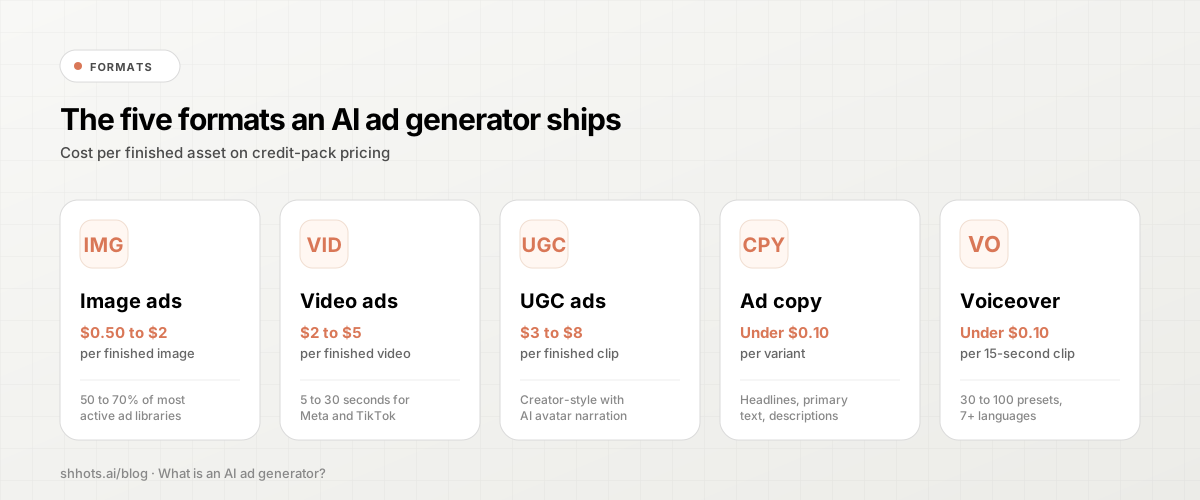
AI ad generators produce five distinct formats. Each format solves a different stage of the funnel, and most ecommerce brands run two or three of them in parallel.
AI image ads
AI image ads are still-image creatives sized for paid placements. They are the cheapest format to produce, the fastest to iterate, and the easiest to test in volume. A typical workflow takes a single product photo, removes the background, places the product in a styled scene (marble counter, golden-hour kitchen, gym locker, hotel pool), adds an overlay headline, and exports the result in 1:1, 4:5, 9:16, and 1.91:1 at once. The cost lands around $0.50 to $2 per image in credit terms. For most ecommerce brands, image ads make up 50 to 70 percent of the active creative library, with new variants shipped weekly to fight ad fatigue.
See examples on AI product photography, or use the AI image ad generator for overlay-driven creatives with text and CTAs.
AI video ads
AI video ads are 5 to 30 second motion creatives, usually formatted for Meta, TikTok, and YouTube Shorts. Modern tools animate a static product photo into a paced clip with camera motion, scene transitions, captions, and a synced voiceover. Some platforms accept a product URL and ship a finished 15-second ad without the user writing a prompt. Cost ranges from $2 to $5 per finished video on credit-pack pricing, and $10 to $30 per video on per-seat subscriptions. Generation time runs from 60 seconds for short clips to 5 minutes for fully voiced 30-second ads. Video drives most of the conversion lift on TikTok and Reels, where static image ads under-perform.
Try the AI video generator built for ecommerce product videos.
AI UGC ads
AI UGC ads are creator-style video ads featuring an AI avatar holding, demonstrating, or reviewing the product. The avatar reads a script (written by the platform or supplied by the brand), and the output looks close to a real influencer review. The format works well for Meta and TikTok feed placements where polished branded video has lower engagement than peer-style content. Generation cost lands around $3 to $8 per finished UGC clip on credit pricing. Production time runs 4 to 8 minutes per video. One trade-off: AI UGC is improving fast but still trails real creator content on conversion rates for high-trust categories like supplements, skincare, and fashion. Brands usually run AI UGC alongside (not instead of) human creators.
See the AI UGC ads generator for examples and templates.
AI ad copy
AI ad copy is the text component: headlines, primary text, descriptions, and CTAs. Modern tools generate copy variants tuned to specific platforms (Meta, Google, TikTok, Pinterest) and specific funnel stages (cold prospecting, retargeting, cart abandonment). The strongest tools train on what has historically converted in the relevant category, so a skincare ad gets different hooks than a power-tool ad. Output usually ships as a batch of 10 to 50 variants per generation, with each variant scored against historical performance data. Copy is the cheapest layer to produce (under $0.10 per variant on most credit pricing) and the fastest to iterate, which is why most teams test 20 to 40 copy variants for every winning image or video. Pair AI-generated copy with a single image variant to isolate which hook is doing the work.
AI voiceover
AI voiceover is the synthetic narration layered over video ads. Modern voice models produce a natural read with appropriate pacing, emphasis, and accent. Most platforms ship 30 to 100 voice presets covering English, Spanish, French, German, Portuguese, Hindi, and Mandarin. A 15-second voiceover usually costs under $0.10 in credit terms and renders in 5 to 10 seconds. The two practical use cases are video ads (where the voiceover acts as the script delivery) and faceless short-form content (where the visuals are stock footage or AI imagery and the voice carries the message). The most common failure mode is over-processed reads that sound robotic on TikTok and Reels, where audiences expect a more conversational delivery.
Pair voiceover with product clips using the faceless AI video generator for fast short-form output — or, for the channel-building side of that workflow, see how to start a faceless YouTube channel.
Who Uses AI Ad Generators
Six profiles use AI ad generators most. The right tool for each profile is slightly different.
Ecommerce founders. Solo founders and small DTC teams use AI ad generators to ship the first 50 ads of a new product launch without hiring a designer. The win is moving from product photo to live ad in under a day instead of two weeks. Most use monthly plans to keep costs predictable.
Performance marketers. Media buyers at growth-stage brands use AI ad generators to refresh creative every 7 to 10 days, the cadence required to keep CPA stable on Meta and Google. Volume matters more than uniqueness at this stage, and AI generation produces the 30 to 60 fresh variants a week that scaled accounts need.
Small agencies. Three-to-ten-person agencies use AI ad generators to expand creative output per client without expanding headcount. The shift is from one designer per client to one strategist plus AI generation, which roughly triples the number of clients a small agency can serve without margin compression.
Shopify sellers. Shopify sellers connect their catalog to an AI ad generator and produce ads for any SKU on demand. The native integration matters: paste a product URL into a URL-to-ad workflow, and the tool pulls the product image, title, price, and bullet points without manual setup.
Dropshippers. Dropshippers run AI ad generators on supplier images that are usually low-resolution and inconsistent. The 4K upscaling step plus background replacement is what makes supplier-photo ads look as polished as branded ads. Speed-to-market matters because winning products turn over weekly.
Content creators. Independent creators and small content studios use AI ad generators to produce sponsored-post creative for brand partnerships, where the brand sends product photos and the creator ships a finished ad in a day.
AI Ad Generator vs Traditional Ad Agency
| Dimension | AI ad generator | Traditional ad agency |
|---|---|---|
| Speed | Minutes per asset | 2 to 4 weeks per campaign |
| Cost (per asset) | $0.50 to $5 in credits | $300 to $1,500 (designer time) |
| Output volume | 30 to 300+ per week | 5 to 20 per week |
| Creative control | Brand kit, references, generation presets | Direct creative direction with team |
| Brand consistency | High once brand kit is configured | High with a mature creative team |
| Iteration speed | Same-day revision per asset | 2 to 5 days per round of revisions |
| Scaling | Linear with credit spend | Linear with headcount and time |
The two approaches solve different problems. An AI ad generator wins on volume, speed, and unit cost. It fits brands that need 50 to 300 fresh variants a month to keep paid spend efficient, where most variants will be tested and killed within a week. A traditional agency wins on judgment-heavy work: a single hero campaign for a brand launch, a TV spot, a brand identity overhaul. Agencies bring strategy, taste, and accountability for outcomes that volume alone cannot solve. Most growth-stage ecommerce brands run both: an AI ad generator for the weekly performance creative pipeline, and a small agency or in-house team for the two or three brand campaigns a year that need senior creative direction.
How to Choose an AI Ad Generator
Seven criteria separate the strong AI ad generators from the rest. Use this checklist before signing up.
-
Promptless or prompt-light workflow. A prompt-heavy tool requires you to write detailed creative briefs for each generation, which slows the pipeline. A promptless tool produces a sensible default from a single product photo or URL, then lets you refine. For volume work, promptless wins because it shortens the per-asset cycle from minutes to seconds.
-
Commercial license and watermark-free exports. Confirm the license terms on every plan, not just the top tier. Some tools watermark outputs on lower tiers, or restrict commercial use to enterprise pricing. A clean tool ships commercial-license, watermark-free output on every paid tier.
-
Output formats and aspect ratios. A good AI ad generator exports every asset in the five sizes paid ads actually need: 1:1, 4:5, 9:16, 16:9, and 1.91:1. Video should ship as MP4 in H.264 at 1080p minimum, with 4K available for top tiers.
-
Pricing model and credit transparency. Credit packs run roughly $0.50 to $3 per asset in published rates. Subscription tools run roughly $29 to $150 per month for the volume most ecommerce teams need. Custom or API pricing kicks in above 200 assets a month. Watch for tools that quote a low headline price but burn credits faster than the math suggests.
-
Ecommerce integrations. A native Shopify app, an Amazon catalog connector, or a working URL-to-ad scraper is the difference between five-minute setup and an hour of manual upload per batch. The integration is the leverage.
-
Output quality. Generate three ads on the free tier or starter plan before committing. Score them on three things: product fidelity (does the product look right), scene coherence (does the background look composed), and ad-realism (would you scroll past it). Tools that fail on product fidelity are not worth fixing.
-
Iteration speed. Measure how long a single revision takes once the first batch is in front of you. Fast iteration tools turn around a revised asset in under 60 seconds. Slow tools require a full re-render. Iteration speed compounds: a tool that is 3x faster per revision lets a team test 3x more creative per week at the same headcount.
For a side-by-side comparison of leading AI ad generators in 2026, see our full roundup of the best AI ad generators.
What to Expect in Your First Week
Realistic expectations matter because most teams over-estimate week-one output and under-estimate week-two refinement. Here is a workable plan.
-
Day 1: Upload and first batch. Upload one or two product photos and generate 20 to 40 image variants in your top format. Expect 60 to 70 percent of the output to be acceptable on the first try. Reject the rest and note why so you can tune later.
-
Day 2: Brand-kit calibration. Upload your brand colors, fonts, logo, and three or four reference ads you like. Re-generate 10 to 20 variants. The hit rate usually climbs to 80 percent once the brand kit is in.
-
Day 3: First test campaign. Pick the top three to five variants and launch a small Meta or TikTok test (a $50 to $100 daily budget per ad set is enough). Run the same audience and bid strategy across variants to isolate which creative wins.
-
Day 4 to 5: Read early signal. After 48 hours, look at CTR, hook rate (3-second video views), and CPM. Cost-per-click and CPA take longer to stabilize. Kill anything below 0.8 percent CTR on Meta or 4 percent hook rate on TikTok.
-
Day 6: Brand-kit refinement. Update the brand kit with what the winners had in common (color temperature, hook line, scene type). The next generation usually returns 90 percent acceptable variants.
-
Day 7: First scaling decision. If one variant cleared the kill thresholds and held a workable CPA, scale its budget 30 to 50 percent and generate five more variants on its template for the next week.
FAQs
What is an AI ad generator?
An AI ad generator is a software tool that turns a product photo, a product URL, or a short brief into finished advertising creative: static image ads, short video ads, ad copy, voiceover, and creator-style UGC. Most platforms target ecommerce brands selling on Shopify, Amazon, and direct-to-consumer channels. The fastest tools produce a publishable asset in under three minutes per format. The category exists to solve the creative volume problem that scaled paid spend creates.
How does an AI ad generator work?
An AI ad generator runs four layers in sequence. The input layer accepts a product photo, URL, or brief. The generation layer routes the work through specialized models (image, video, language, voice). The output layer formats the finished creative in the aspect ratios each platform requires. The feedback layer logs which variants performed, scores them against historical data, and feeds the winners back into the next batch. Better tools route generation through models fine-tuned on advertising data rather than general image or text models.
Are AI-generated ads as good as human-made ads?
For volume-heavy performance creative (most paid ads on Meta, TikTok, and Google), AI-generated ads now match human-made ads on engagement metrics and cost-per-result when the brand kit is configured properly. For judgment-heavy work (a brand-launch hero campaign, a category-defining concept, a televised spot), human creative still wins. Most successful ecommerce teams use both: AI for the 50 to 300 weekly performance variants, human creative for the two or three brand campaigns a year that set strategic direction.
Will AI-generated ads look fake?
AI-generated ads look fake when three things go wrong. The product is rendered as a secondary element rather than the focus. The lighting and shadow direction do not match the scene. The motion or camera move is generic rather than purposeful. Strong AI ad generators avoid these failure modes by keeping the source product photo intact, generating lighting consistent with the chosen scene, and using motion presets tuned for ad pacing. Output quality is also tightly correlated with input quality: a 1080p product photo produces noticeably better ads than a 400-pixel supplier image.
Do AI ad generators work for Shopify?
Yes. Most AI ad generators built for ecommerce ship either a native Shopify app or a URL-to-ad scraper that reads a Shopify product page. The Shopify app route pulls your catalog, lets you select any SKU, and generates ads in bulk. The URL-to-ad route lets you paste any product URL and produces an ad without manual upload. For catalogs above 50 SKUs, the native app saves hours per batch. For one-off product launches, the URL workflow is faster.
How much does an AI ad generator cost?
Two pricing models dominate. Credit-based plans run $19 to $99 a month, with credits priced at roughly $0.50 to $3 per finished asset depending on format. Monthly subscriptions run $29 to $150 per month for the volume most ecommerce teams need. Enterprise and API tiers kick in above 200 assets per month. Watch for headline prices that look low but burn credits faster than the math suggests: a $19 plan with 50 credits priced at one image per 12 credits is a four-image plan, not a fifty-image plan.
Can AI ad generators replace my designer?
For performance creative at volume (50+ variants per week), AI ad generators replace most of the work a designer does on that pipeline. For brand work (a hero campaign, a category launch, a brand-identity refresh), they do not. Most ecommerce teams shift their designer’s role rather than eliminate it: the designer moves from producing variants to setting the brand kit, defining the creative direction, and reviewing the top 10 percent of AI output. The result is one designer doing the strategic work that previously required three.
What’s the difference between an AI ad generator and an AI image generator?
An AI image generator (like Midjourney or Stable Diffusion) is a general-purpose visual tool that produces any image from a text prompt. An AI ad generator is purpose-built for ad output: it ships in correct ad aspect ratios, applies brand-consistent styling, includes commercial licensing, integrates with ecommerce platforms, and routes generation through models tuned on advertising data. The trade-off: a general image generator gives you more creative freedom; an AI ad generator gives you faster, more reliable ad-ready output.
Do AI-generated ads convert?
Yes, when the workflow is set up properly. Ecommerce brands report similar or better CTR, hook rate, and CPM on AI-generated ads compared with human-designed variants once the brand kit is configured and the test is run at adequate volume (at least 5 to 10 variants per audience). Conversion rate and CPA depend on offer, audience, and product-market fit more than on the creative source. The compounding advantage of AI ads is volume: testing 30 variants a week beats testing 3 a week, regardless of who made them.
Which platforms do AI-generated ads work on?
The five platforms AI ad generators ship to by default are Meta (Facebook and Instagram), TikTok, Google Ads (image and video), YouTube Shorts, and Pinterest. Most tools also export to LinkedIn, Snapchat, and X. Output is sized correctly for each platform: 1:1 and 4:5 for Meta feed, 9:16 for Stories and TikTok, 16:9 for YouTube, 1.91:1 for link cards. Some tools handle Amazon and marketplace listings as a separate workflow because the image requirements are stricter (white background, infographic overlays).
Can I use AI-generated ads commercially?
Yes, on most professional plans. The strong AI ad generators include a full commercial license on every paid tier, which covers paid advertising, organic social, marketplace listings, ecommerce storefronts, and client deliverables. Watermark-free exports are the same: included on every paid tier with the strong tools, gated to higher tiers with weaker ones. Read the license terms before signing up because a small number of tools restrict commercial use to enterprise pricing. Free tiers usually include watermarks or non-commercial-use restrictions.
How long does it take to generate an AI ad?
Generation time depends on format. AI images render in 30 to 60 seconds. Ad copy variants generate in under 10 seconds. AI voiceover renders in 5 to 10 seconds for a 15-second clip. AI video ads take 1 to 5 minutes depending on length and complexity. AI UGC ads with an avatar and full voiceover take 4 to 8 minutes. Most platforms run multiple jobs in parallel, so a full batch of 10 image ads, 5 video ads, and 30 copy variants can finish in under 15 minutes.
Bottom line
An AI ad generator turns product photos and URLs into ready-to-publish ad creative across image, video, UGC, copy, and voiceover. It fits ecommerce brands that need 50 to 300 fresh variants a month to keep paid spend efficient, and it sits alongside (not instead of) a designer who handles brand-level work.
Generate image, video, and UGC ads from one workspace with the AI ad generator, or compare the leading 2026 tools in our best AI ad generator guide. See pricing for plan details, including what an AI ad generator costs in 2026.