Disclosure: Shhots AI is our product.
The best Luma AI alternatives in 2026 are Shhots AI for ecommerce ad video, Google Veo 3 for cinematic quality, and Kling AI for the most generous free tier. Luma Dream Machine makes gorgeous cinematic clips with real camera moves, but its free plan blocks commercial use, and it is a creative tool rather than an ad tool built around your product.
I tested 10 Luma alternatives on the same product photo, judging output quality, commercial rights, pricing, and how quickly each one produced something I could actually run as an ad. The short answer: if you want a free Luma AI alternative to experiment with, start with Kling or Dreamina; if you want a video you can legally publish for a brand, pay a little for the right tool.
Below is the quick pick, then a full comparison table, then honest deep-dives on each option.
Quick pick: best Luma AI alternative by use case
- Best for ecommerce product ads: Shhots AI, from $19/month, watermark-free, commercial license on every plan.
- Best free Luma AI alternative: Kling AI, 66 free credits daily that reset every 24 hours (great for testing).
- Best cinematic quality: Google Veo 3, photorealism with native audio.
- Best frame-level control: Runway, commercial rights on all tiers, from $12/month annual.
- Cheapest paid clips: Pika, watermark-free and commercial from $8/month annual.
Why people look for a Luma AI alternative
The free tier blocks commercial use. Luma’s free Dream Machine plan gives about 30 generations a month, but the output is 720p, watermarked, and explicitly non-commercial. You cannot legally run any of it as a paid ad, which is the single most common reason people search for a Luma Dream Machine alternative.
Cost climbs fast for commercial rights. To remove the watermark and get commercial use you need at least the Plus/Standard plan at roughly $29.99 a month, with Pro around $89.99 and Premier plans reaching several hundred dollars per month. That is a lot for short clips.
It is cinematic, not commercial. Luma is tuned for beautiful camera moves and dreamy motion, not for keeping a product label sharp, holding brand colors, or sizing an ad for TikTok, Reels, or a marketplace listing.
Reddit-style gripes are real. Search threads for a Luma Labs AI alternative and you will see the same complaints: prompts drift, hands and text warp, and re-rolls eat credits. Those are honest limits of every general model, Luma included.
The best Luma AI alternatives (compared)
Every price below is web-verified for 2026. Where a vendor changes numbers by region or promo, I describe the tier qualitatively rather than guessing an exact figure.
| Tool | Best for | Free tier | Starting price | Max clip / notes |
|---|---|---|---|---|
| Shhots AI | Ecommerce product + ad video | No free tier (paid only) | $19/mo | Watermark-free + commercial license from $1; product-accurate |
| Google Veo 3 | Cinematic 4K with native audio | Limited via Gemini free credits | ~$19.99/mo (Google AI Pro) | ~8s per clip, 720p-1080p (up to 4K), native audio |
| Kling AI | Most generous free tier | Yes, 66 credits/day (non-commercial) | ~$10/mo (Standard) | Up to ~15s, 1080p + lip sync; commercial needs Standard |
| Runway | Frame-level creative control | Yes, 125 one-time credits (watermarked) | $12/mo annual ($15 monthly) | Commercial rights on all tiers; credits move fast |
| Pika | Cheapest paid social clips | Yes, 80 credits/mo, 480p, watermark | $8/mo annual ($10 monthly) | Watermark-free + commercial on paid; fun effects |
| Hailuo AI (MiniMax) | Realistic motion on a budget | Yes, daily free credits | ~$7.99-9.99/mo | Up to ~6s, 768p/1080p; strong micro-expressions |
| PixVerse | Effects + quick social video | Yes, 60 credits/day, 720p, watermark | ~$10/mo (Standard) | 1080p + watermark removal on paid |
| LTX Studio | Multi-shot storyboarding | Yes, 800 credits one-time (personal) | $15/mo (Lite) | Storyboard workflow; commercial from Standard $35/mo |
| Kaiber | Stylized / artistic looks | 5-day trial (~$5) | ~$10/mo (Starter) | Aggregates top models under one plan |
| Dreamina (Seedance) | Free daily generations | Yes, free daily credits | Free / low-cost paid tiers | ByteDance Seedance 2.0, 1080p; budget option |
| Luma Dream Machine (reference) | Cinematic camera moves | 30/mo, 720p, watermark, no commercial | ~$29.99/mo (commercial) | Ray3 / Ray3.14 model; 1080p on paid |
The best Luma AI alternatives
1. Shhots AI (best for ecommerce ads)
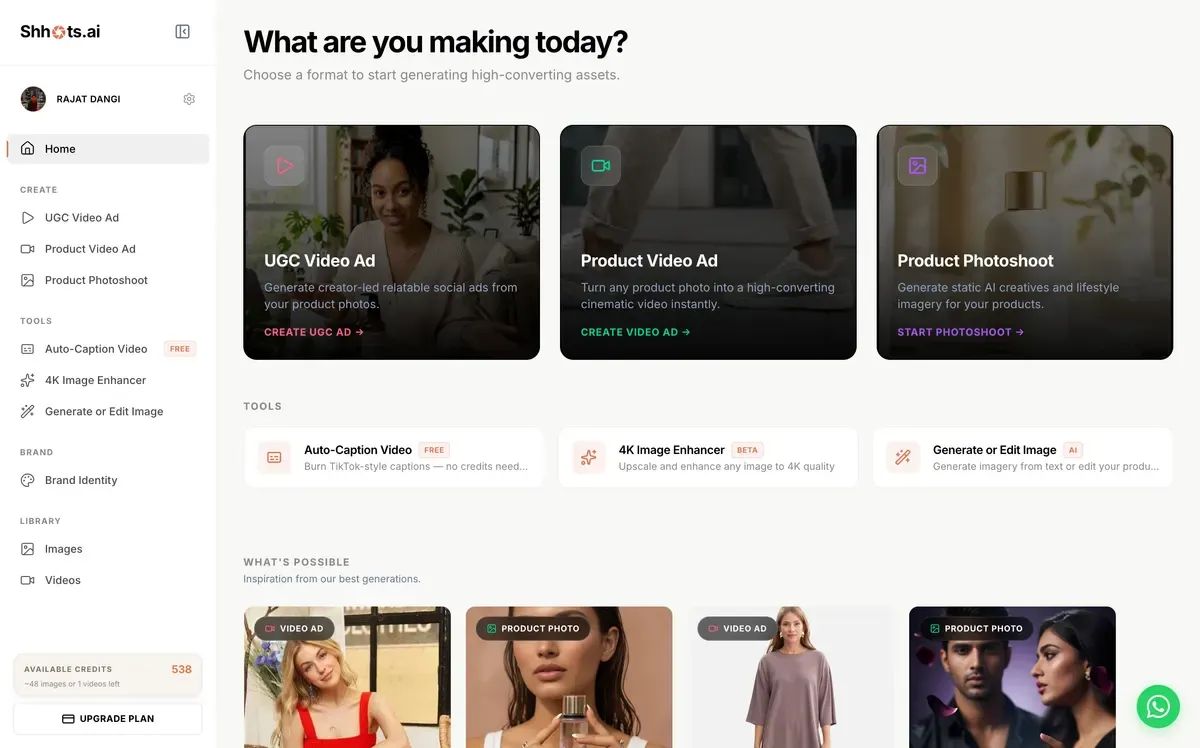
Shhots AI turns one product photo into UGC, product, and cinematic ad variants sized for TikTok, Reels, Meta, and YouTube. It runs the leading video models for you, so there are no prompts to write and no re-rolls to babysit. Every plan is watermark-free and includes a commercial license from the first dollar, starting at $19 a month. Start with the image-to-video tool or the AI product video generator.
Genuine limit: it is built for ecommerce ad and product video, not open-ended cinematic art films.
Best for: brands that need commercially licensed, product-accurate ad video fast.
2. Google Veo 3 (best cinematic quality)
Google Veo 3 matches or beats Luma on photorealism and adds native audio, generating clips up to about 8 seconds at 720p-1080p, with 4K available via upscaling. Access runs through Google AI Pro at roughly $19.99 a month, with the AI Ultra tier (~$42.99) adding heavier usage. Free evaluation is possible through limited Gemini credits.
Genuine limit: short clip length and tight generation caps unless you pay up.
Best for: cinematic brand films where realism and sound matter most.
3. Kling AI (best free Luma AI alternative)
Kling AI has the most generous free tier here: 66 credits a day that reset every 24 hours, enough for several standard clips daily to test the model. Kling 3.0 produces up to roughly 15 seconds at 1080p with native audio and strong lip sync. Paid Standard starts around $10 a month.
Genuine limit: free output is watermarked and not licensed for commercial use. You need the Standard plan for commercial rights.
Best for: free testing and spokesperson-style character motion.
4. Runway (best frame-level control)
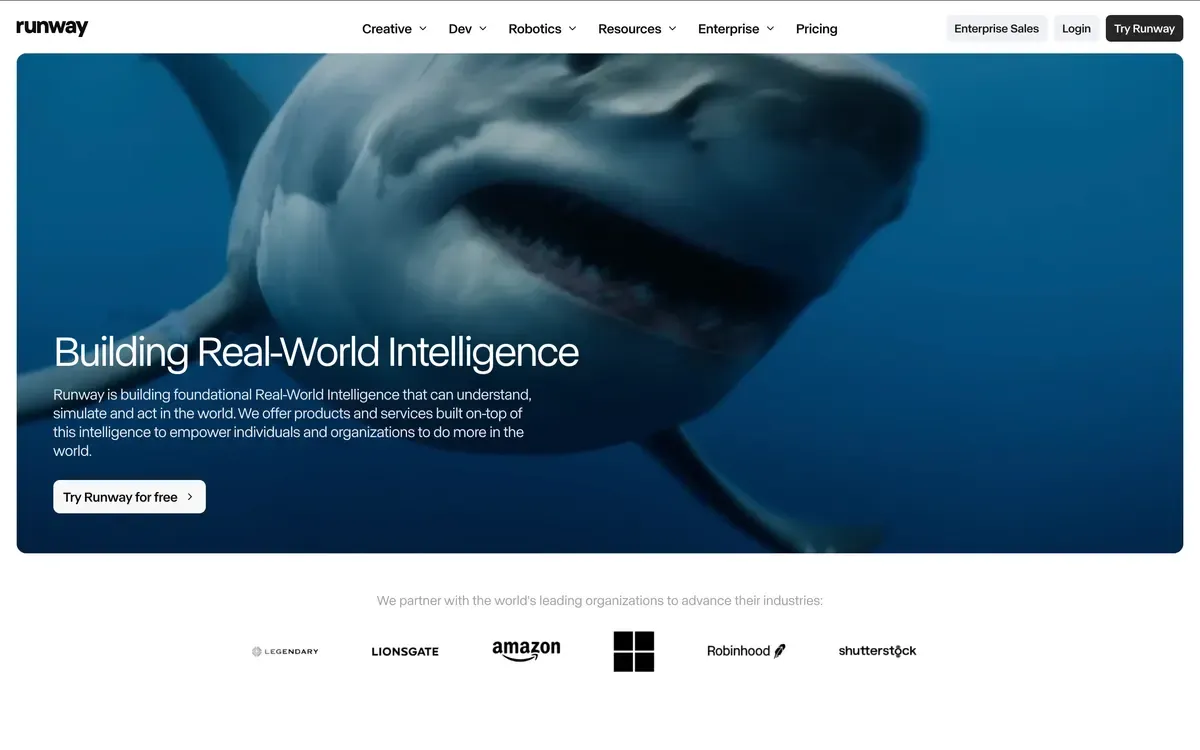
Runway Gen-4.5 offers directed camera and motion control that creative editors love. Crucially, commercial rights apply on every tier, including the free plan’s 125 one-time credits (watermarked). Paid Standard is $12 a month on annual billing ($15 monthly), with Pro at $28 annual.
Genuine limit: credits deplete quickly, and the free 125 credits do not refill.
Best for: directors who want manual control over shots rather than one-click ads.
5. Pika (cheapest paid clips)
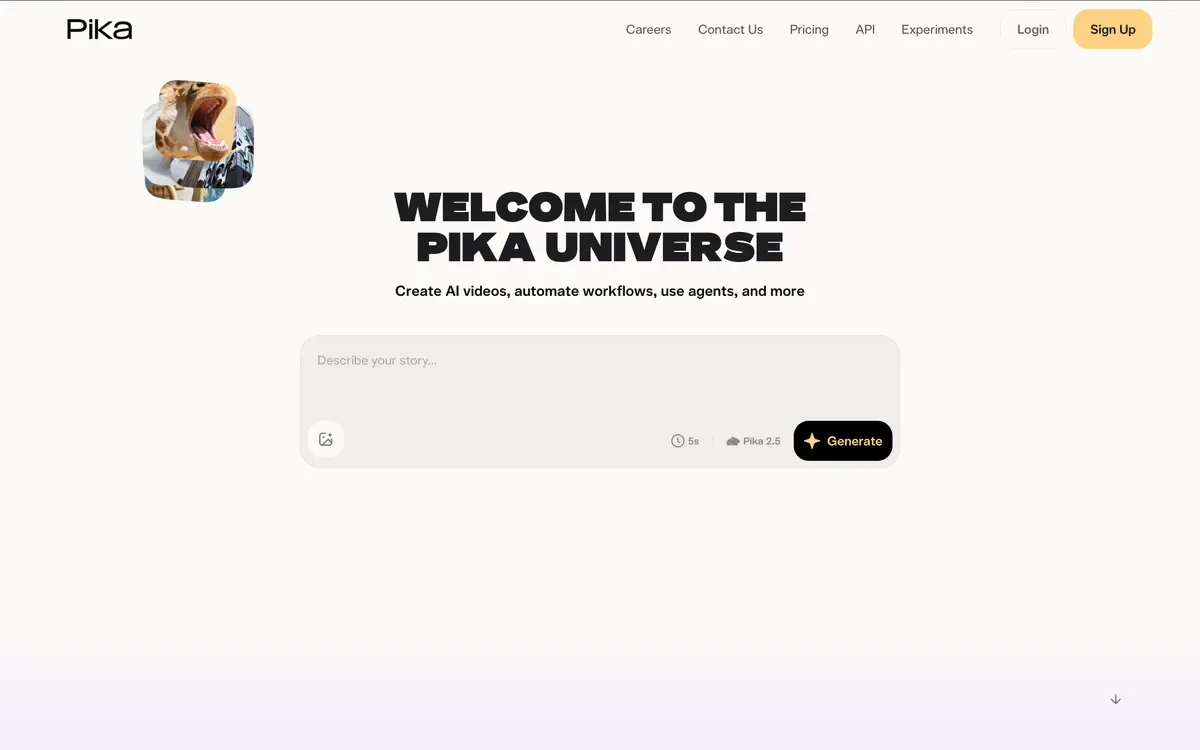
Pika is the budget pick for fun, effect-driven social clips. The free plan gives 80 credits a month at 480p with a watermark and no commercial use, while the Standard plan at $8 a month (annual) adds all resolutions, watermark-free downloads, and commercial rights.
Genuine limit: the free tier is watermarked and non-commercial, so you must pay to publish.
Best for: cheap, playful short-form social video.
6. Hailuo AI (MiniMax)
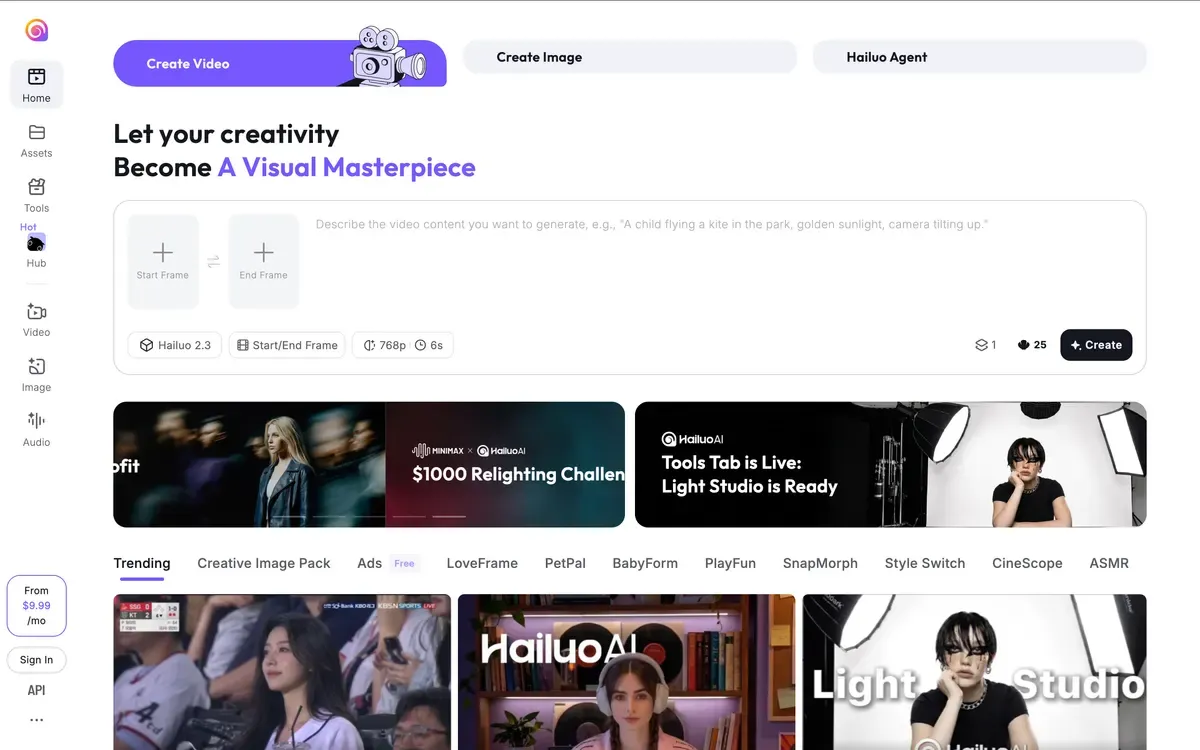
Hailuo AI, from MiniMax, punches above its price on realistic motion and micro-expressions. The Hailuo 2.3 model supports text-to-video and image-to-video at 768p or 1080p, up to about 6 seconds. Free daily credits let you test it, and paid plans start near $7.99-9.99 a month with watermark-free exports.
Genuine limit: clips are short, and 1080p costs noticeably more credits than 768p.
Best for: lifelike character motion on a small budget.
7. PixVerse
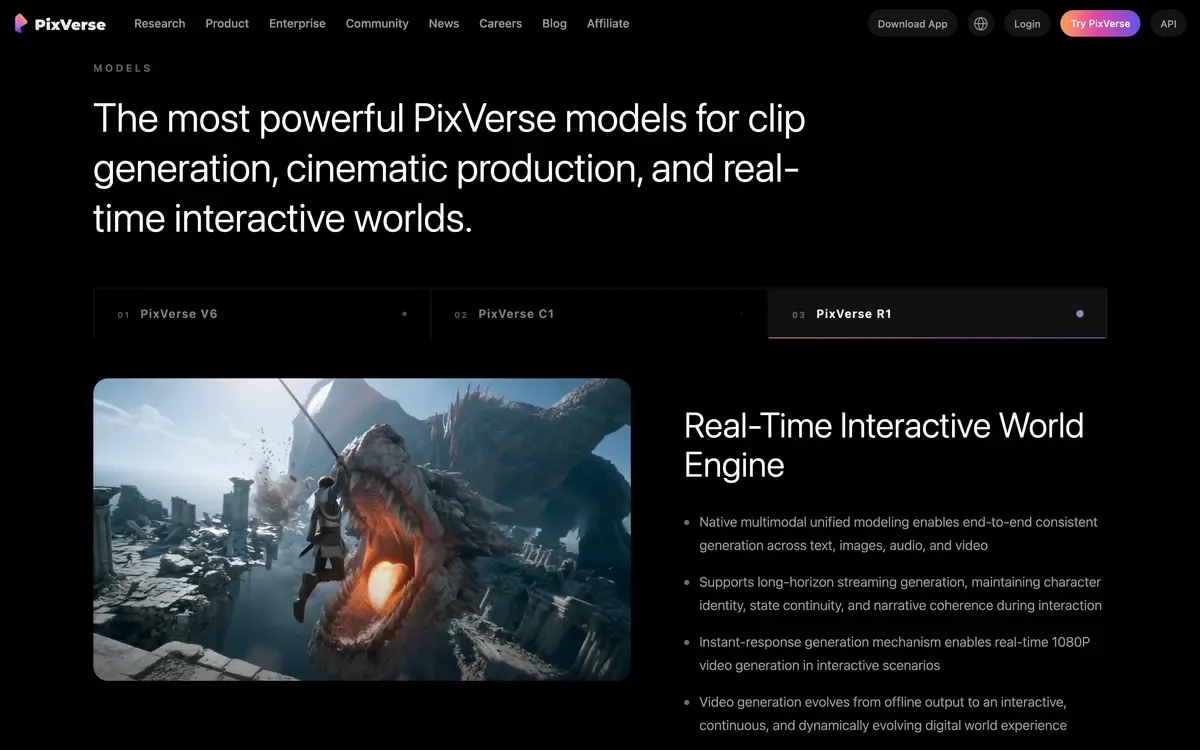
PixVerse pairs a solid free tier, 60 daily credits plus signup credits, with a big library of one-tap effects and templates for social. Free output is capped at 720p with a watermark; paid Standard at about $10 a month adds 1080p and watermark removal.
Genuine limit: most creators need a few generations to land one usable clip, so real cost per final video is higher than the sticker price.
Best for: trend-driven effect videos and quick social experiments.
8. LTX Studio

LTX Studio is less a single-clip generator and more a storyboard-to-film workspace, letting you plan multi-shot scenes with consistent characters. The free plan gives 800 one-time credits for personal use; Lite is $15 a month, and commercial use plus higher-end models arrive on Standard at $35.
Genuine limit: the storyboard workflow has a learning curve and commercial rights are gated behind the $35 tier.
Best for: narrative, multi-shot pieces rather than single ad clips.
9. Kaiber
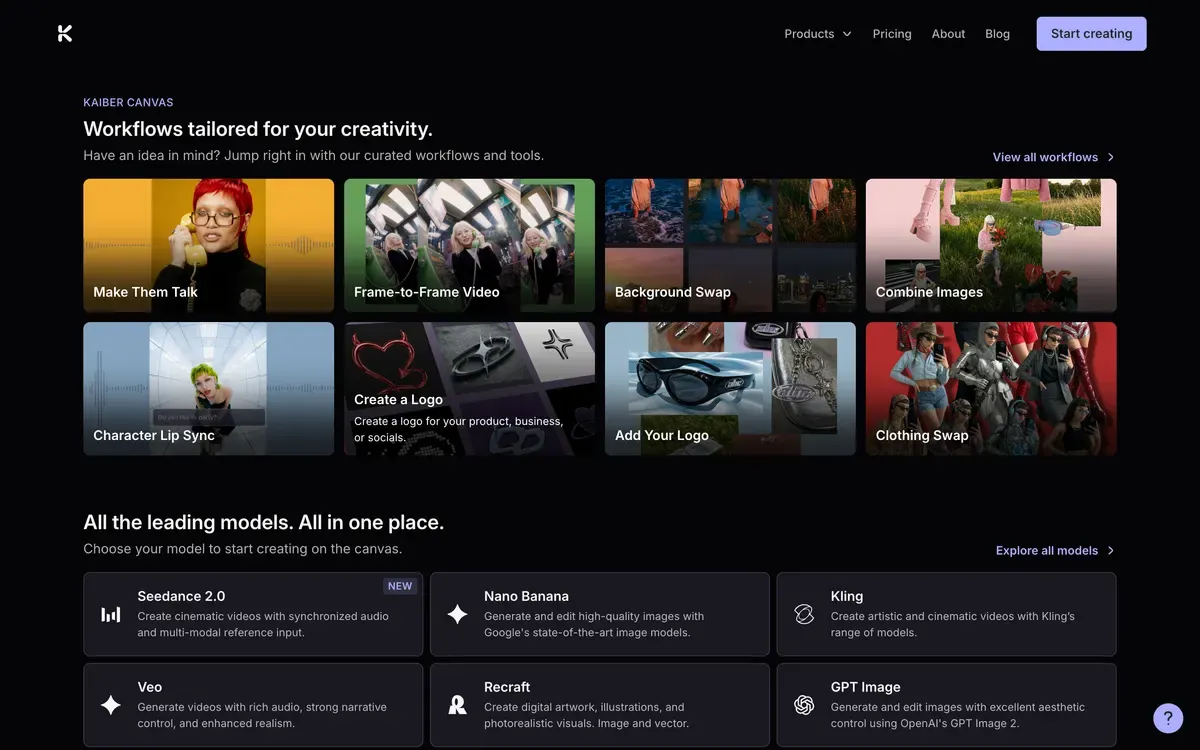
Kaiber leans into stylized, artistic, music-driven video and now bundles access to leading models (Veo, Kling, Runway, Luma Ray, Flux) under one subscription. Plans start around $10 a month for the Starter tier, with a short paid trial to test it.
Genuine limit: it favors creative and stylized output over clean, literal product rendering.
Best for: music videos, artistic loops, and stylized brand visuals.
10. Dreamina (Seedance by ByteDance)
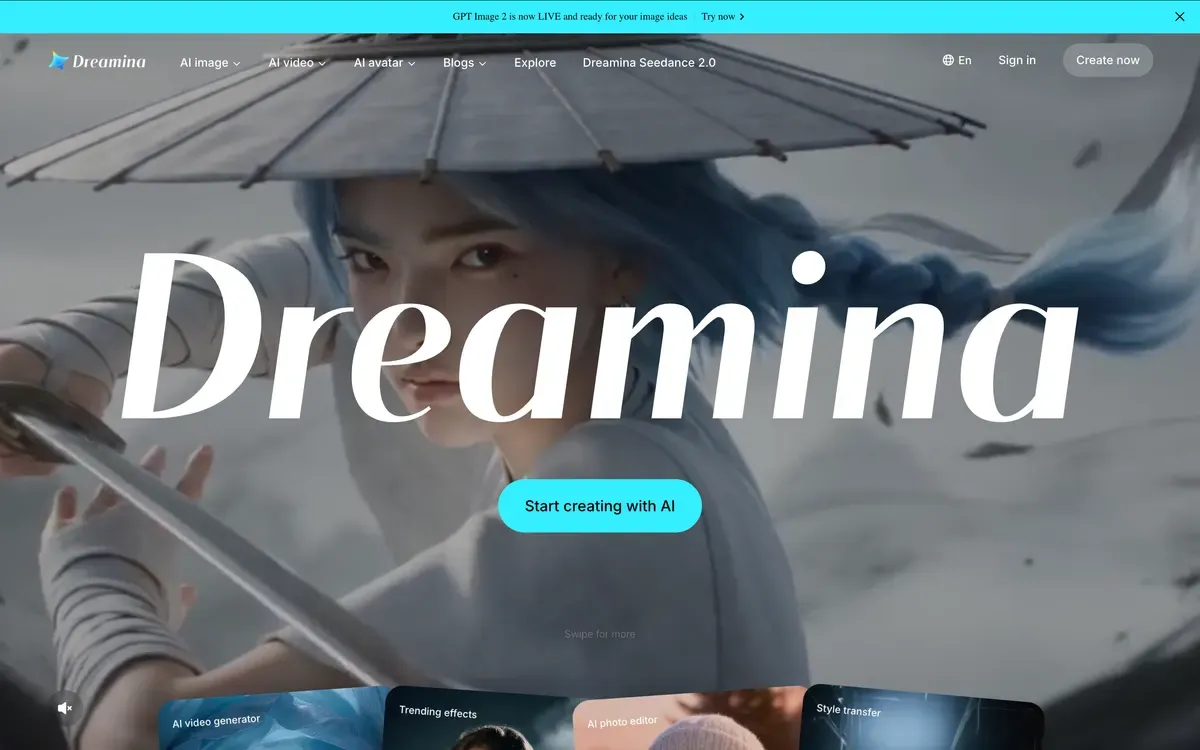
Dreamina is ByteDance’s consumer front end for the Seedance 2.0 model, offering free daily credits and 1080p multimodal generation from text or images. It is a genuinely low-cost way to try a strong recent model, roughly a fraction of premium-tier prices.
Genuine limit: free daily credits are limited (a couple of clips a day), and it is a general creative tool, not an ad builder.
Best for: budget-conscious testing of a capable 2026 model.
How to make a product video with Shhots AI
You do not need to write prompts or fight a general model to get a usable ad. Here is the flow:
- Upload one product photo to the image-to-video tool. A clean packshot works best.
- Pick a style and format, UGC, product spotlight, or cinematic, sized for TikTok, Reels, Meta, or YouTube.
- Generate. Shhots runs the right model for you and keeps the product label, shape, and colors accurate.
- Export watermark-free with a commercial license included on every plan. Need stills too? Use the image ad generator or 4K upscaler.
Luma Dream Machine vs Shhots AI for ecommerce
Luma makes a gorgeous clip. Shhots makes a usable ad. Luma Dream Machine (Ray3) wins on cinematic camera moves and dreamy motion, and it is the honest pick if you want an artistic film. But for a store, three things decide it: commercial licensing, product accuracy, and placement sizing. And Shhots covers all three from $19 a month, watermark-free, with no prompt engineering.
If your goal is a beautiful hero shot for a reel, Luma is fine. If your goal is an ad that keeps the label sharp and can legally run on Meta or TikTok tomorrow, Shhots is the better fit. For the wider model landscape, see the best AI image to video generator guide, our affordable AI video for product listings breakdown, and sibling roundups like Runway alternatives and Kling AI alternatives.
FAQs
What is the best free Luma AI alternative?
For free testing, Kling AI is the strongest option: 66 credits a day that reset every 24 hours, enough for several clips. Dreamina and PixVerse also offer free daily credits. Note that most free tiers are watermarked and non-commercial, so for guaranteed commercial rights and no watermark, a low-cost paid tool like Shhots AI ($19/month) is the reliable choice.
Can I use Luma Dream Machine output commercially?
Not on the free plan, which is 720p, watermarked, and explicitly non-commercial. You need at least Luma’s paid Plus/Standard plan (about $29.99 a month) for commercial rights and watermark-free export. If commercial use is the goal, Shhots AI includes a commercial license on every plan, starting at $19 a month.
What is the best Luma AI alternative for product ads?
Shhots AI. It builds ad-ready UGC, product, and cinematic video from a single product photo, keeps the product accurate, sizes clips for each platform, and exports watermark-free with a commercial license. It is purpose-built for ecommerce, whereas Luma, Veo, and Kling are general creative tools you have to adapt.
What do Reddit users recommend as a Luma alternative?
Common Reddit picks for a Luma Labs AI alternative are Kling (free credits, good motion), Runway (control), and Veo 3 (realism). The recurring complaint across all general models is prompt drift and wasted credits on re-rolls. For predictable, commercial ad output, a dedicated tool like Shhots removes the prompt guesswork.
Which Luma alternative has the best cinematic quality?
Google Veo 3 leads on cinematic realism and adds native audio, though clips top out around 8 seconds. Kling is close for character-driven shots with longer durations and lip sync. Luma Dream Machine itself remains excellent specifically for camera moves, if you can accept its short paid-only commercial terms.
Is there a cheaper alternative to Luma Dream Machine?
Yes. Pika starts at $8 a month and Shhots AI at $19 a month, both cheaper than Luma’s ~$29.99 commercial tier. And both are watermark-free on paid plans. Shhots also includes a commercial license from the first plan, so there are no surprise licensing costs before you can run an ad.
Do these alternatives add a watermark?
Most free tiers do. Luma, Kling, Pika, PixVerse, and Runway all watermark free output. Watermark removal generally requires a paid plan. Shhots AI is watermark-free on every plan, including the $19 entry tier, so your exports are ready to publish without an upgrade.
Which Luma Dream Machine alternative is easiest for non-editors?
Shhots AI. There are no prompts, timelines, or credit math. You upload a product photo, pick a format, and export a finished ad. General tools like Runway and LTX Studio are more powerful but assume you enjoy directing shots and managing credits.
Related AI video tool comparisons
Comparing more tools? See our other hands-on guides: Sora alternatives, Kling AI alternatives, Runway alternatives, and Google Veo 3 alternatives. For the wider field, see the best AI video generator roundup and the best AI image to video generator comparison.
Turn a product photo into a video ad with Shhots AI from $19/month, or see pricing.